Distributed Cloud Server Architecture for High-Throughput Meteorological Data
Our platform is built on a globally distributed, cloud-native architecture specifically optimized for processing massive meteorological data streams with zero latency and perfect reliability.

High-Throughput Data Pipelines
Real-time ingestion, processing, and analysis of global weather data at planetary scale
Radar Telemetry Ingestion
Ingest raw radar data from thousands of ground-based meteorological stations worldwide with real-time calibration, quality assurance, and automated error detection. Our systems process terabytes of raw data per hour while maintaining sub-millisecond latency for critical storm signatures.
- • Multi-format radar data normalization (NEXRAD, C-band, S-band)
- • Continuous quality assurance and anomaly detection
- • Automatic failover and redundant data stream handling
- • Real-time velocity dealiasing and reflectivity calibration
Real-Time Alert Dispatch Networks
Automatically detect severe weather threats and dispatch alerts to emergency responders, media organizations, and the public within milliseconds. Our distributed message queue system ensures guaranteed delivery with zero data loss across multiple redundant channels.
- • Machine learning-powered threat detection algorithms
- • Multi-channel alert distribution (SMS, email, push notifications, APIs)
- • Geofenced alert targeting with population density weighting
- • Audit logging and compliance tracking for emergency management
Distributed Data Processing Clusters
Process meteorological data across globally distributed Kubernetes clusters that automatically scale based on data volume and complexity. Each regional cluster can operate independently while maintaining global data consistency.
- • Kubernetes-native auto-scaling based on telemetry load
- • Distributed message streaming (Apache Kafka, Pulsar)
- • Time-series database optimization for sensor data
- • Regional edge computing for sub-latency critical operations
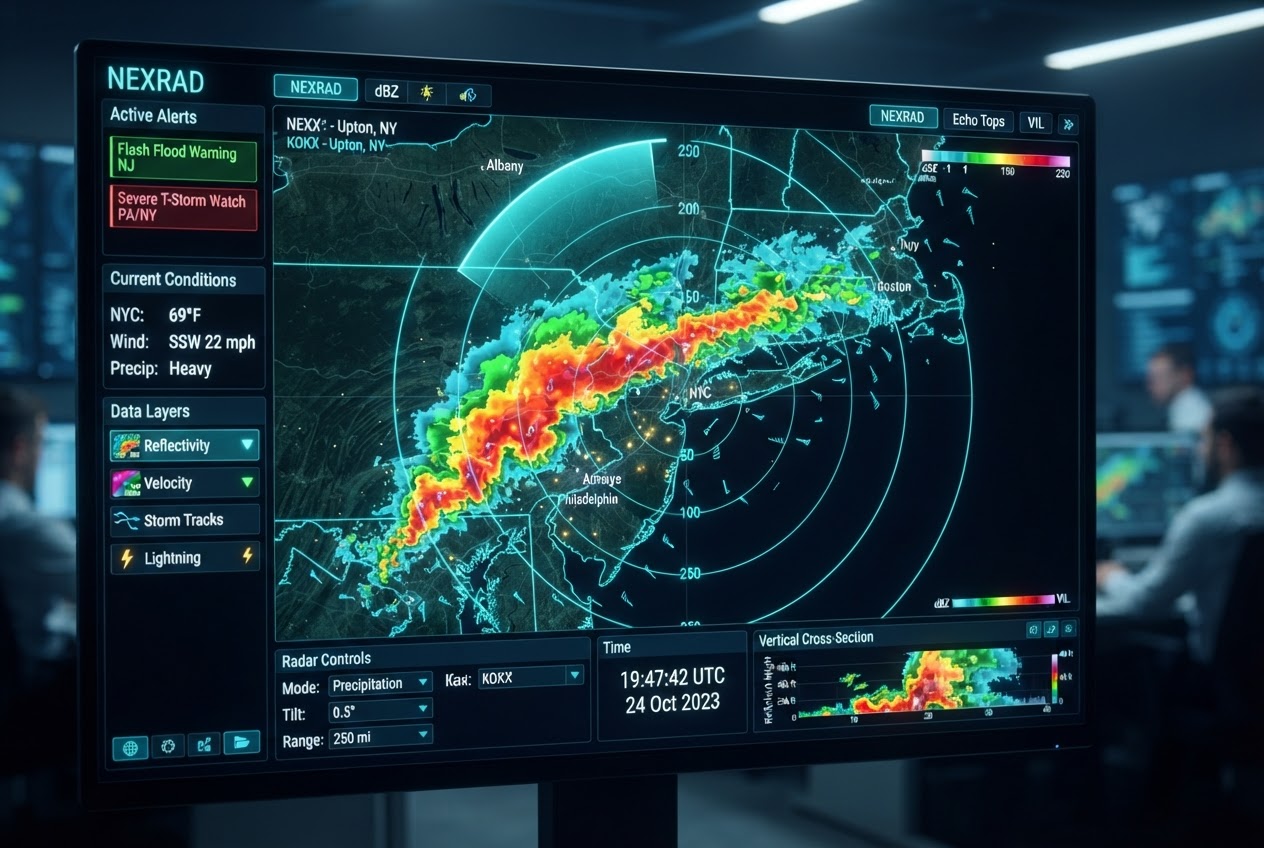
Advanced Weather Analytics Engine
Process complex meteorological datasets with AI-driven pattern recognition, predictive modeling, and historical trend analysis.
Storm Cell Tracking
Automatically identify, track, and predict severe storm cells using advanced image processing and machine learning algorithms.
Severe Weather Assessment
Real-time analysis of wind shear, hail potential, tornado probability, and flash flood risk using multi-source data fusion.
Long-Range Forecasting
Generate 7-14 day severe weather outlooks using ensemble model predictions and historical pattern matching.
Climate Pattern Analysis
Analyze seasonal trends, climate anomalies, and long-term meteorological patterns for strategic planning.
Performance Benchmarks
Data Ingestion Rate
10+ GB/s
Real-time ingestion of meteorological sensor data from global networks with zero loss
Processing Latency
<50ms
End-to-end processing time from raw radar data to predictive storm alerts
Query Response Time
<100ms
Sub-second response for petabyte-scale historical analytics queries